
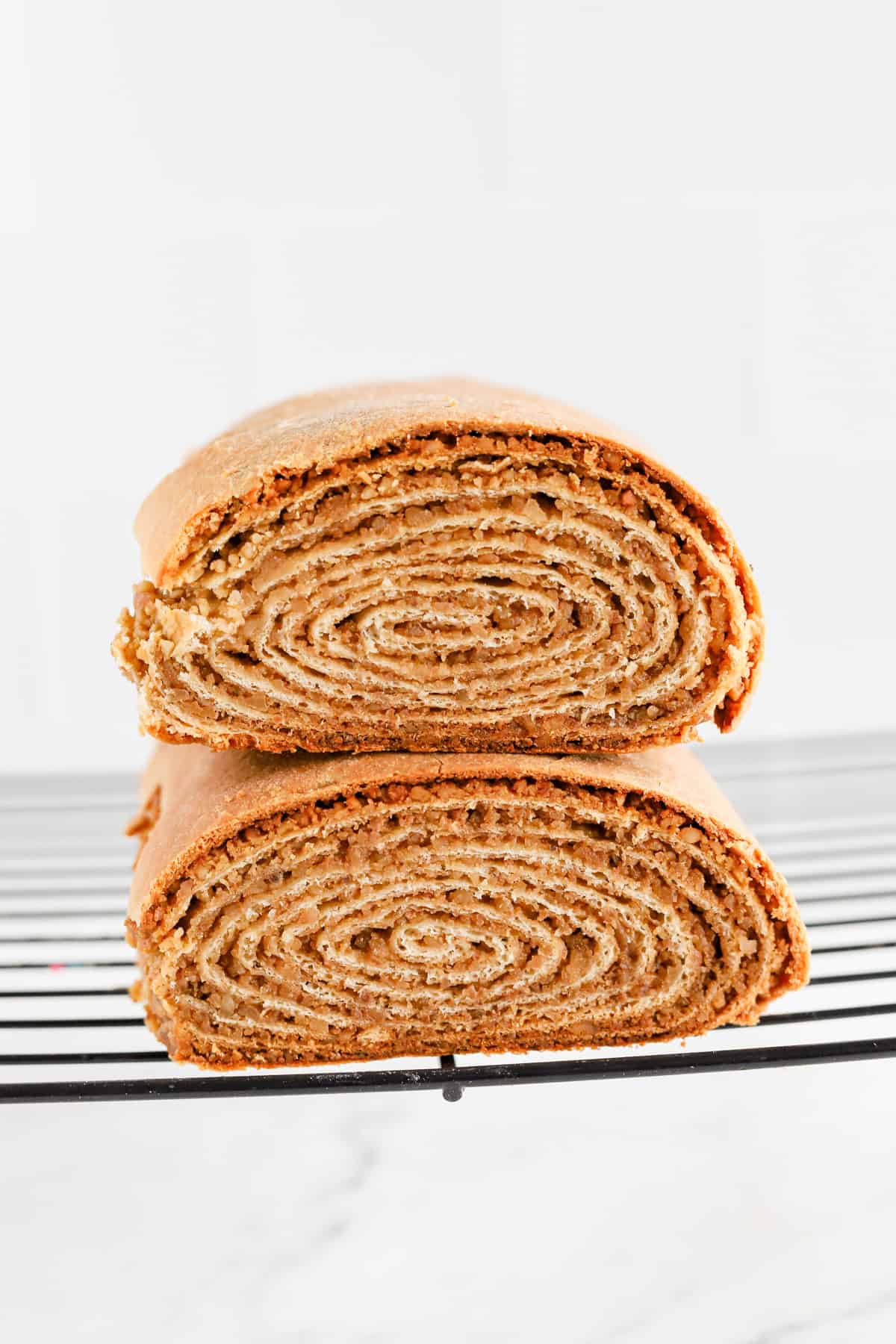
Potica (pronounced poh-TEET-sah) is a traditional Slovenian pastry made with a yeast-enriched sweet dough that’s stretched paper-thin, spread with a honey-walnut filling, rolled, and baked until golden brown. This recipe is a labor of love, but I guarantee it’s worth it.
Thank you for this and for the challenge to get my rolls as tight as yours. That is next level!!
What is Potica?
If you grew up in Minnesota’s Iron Range like I did, you probably know potica well. But when I left for college, I quickly realized most people outside of northern Minnesota had never even heard of it.
Potica is a famous holiday sweet bread in Slovenia. It’s served at Christmas, Easter, and special family gatherings. It’s a recipe that is passed down through generations of my family. Think of it as a rich, sweet “nut roll,” swirled with layers of flavor.
The History of Potica: From Slovenia to Minnesota’s Iron Range
I grew up on Minnesota’s Iron Range, which was quite a melting pot of immigrants. They came to the area for jobs in the mining industry. Among them were Slovenians, including some of my own family, who made sure potica lived on in America.
Potica is sometimes called a Slovenian Nut Roll. This yeast dough dessert has been baked for centuries, always with slight family variations. My grandma made both potica and strudel, and my dad still laughs about how hot her kitchen would get when she cranked the thermostat to keep her dough rising.
Around the holidays, word would spread that the “potica ladies” were in action. These women were local legends!
How to Make Potica Step by Step
Every family has its own spin on the recipe. In my recipe boxes from Mom and Grandma, I found at least three versions. My friend Samantha and I even merged our family recipes: mine for the dough, hers for the filling, and created what we both agree is the best walnut potica recipe ever.
Here’s a very broad overview:
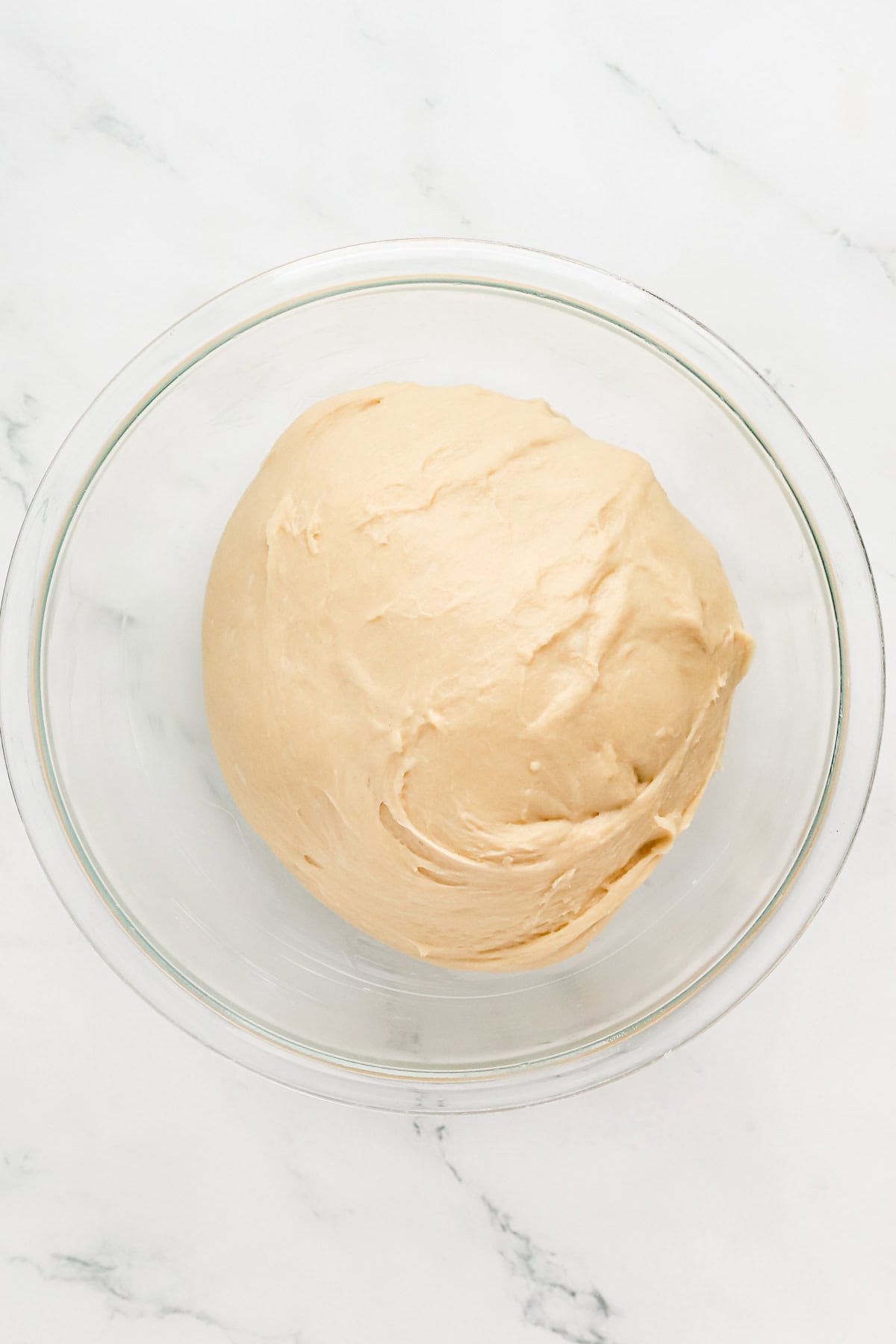
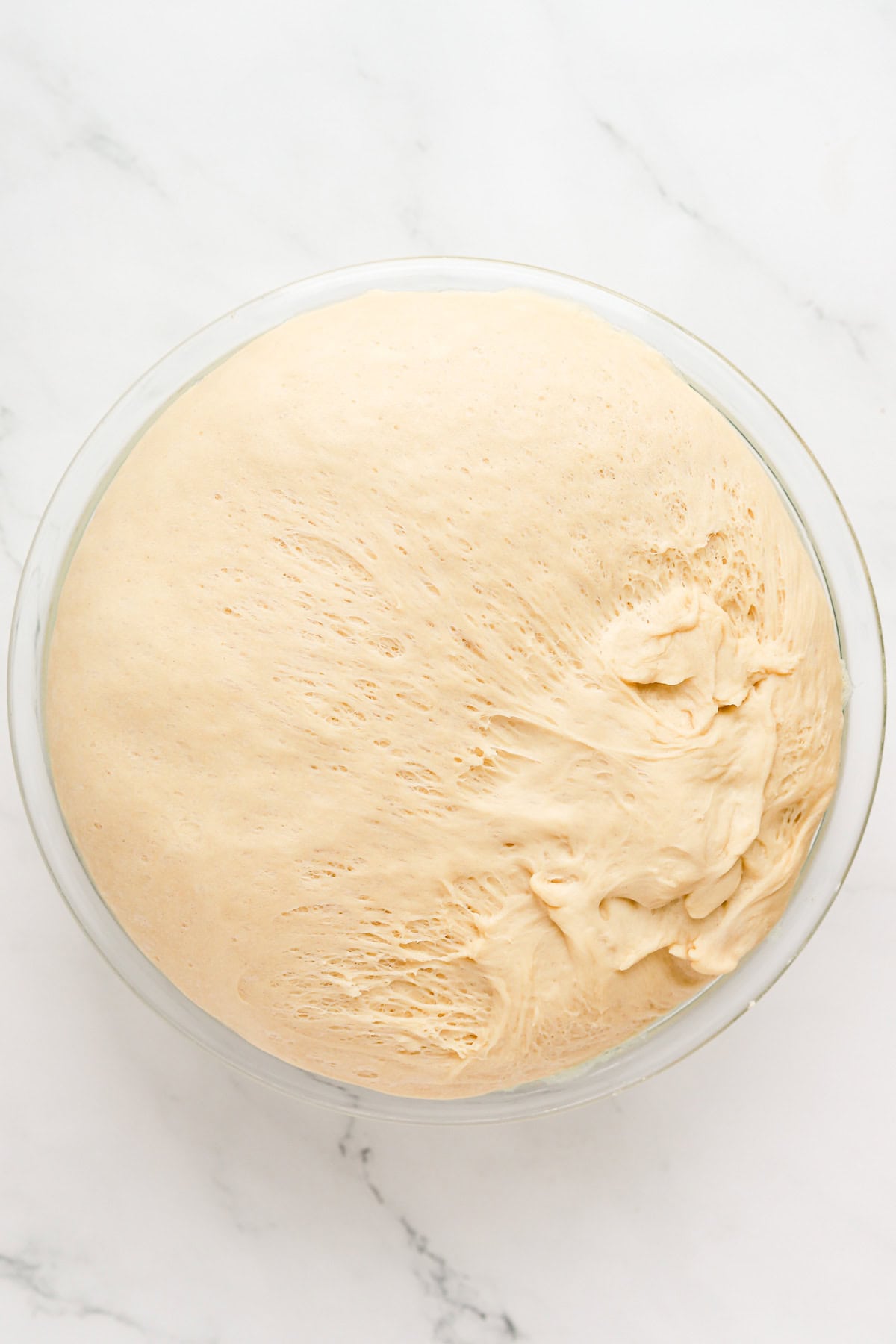
1. Make the dough – Start with a yeast-enriched dough and let it rise until doubled in size (about 60-90 minutes). Be sure your water is lukewarm (105–110°F). Too hot will kill the yeast, too cold and it won’t rise. You’ll know the dough is ready when it springs back when lightly poked.
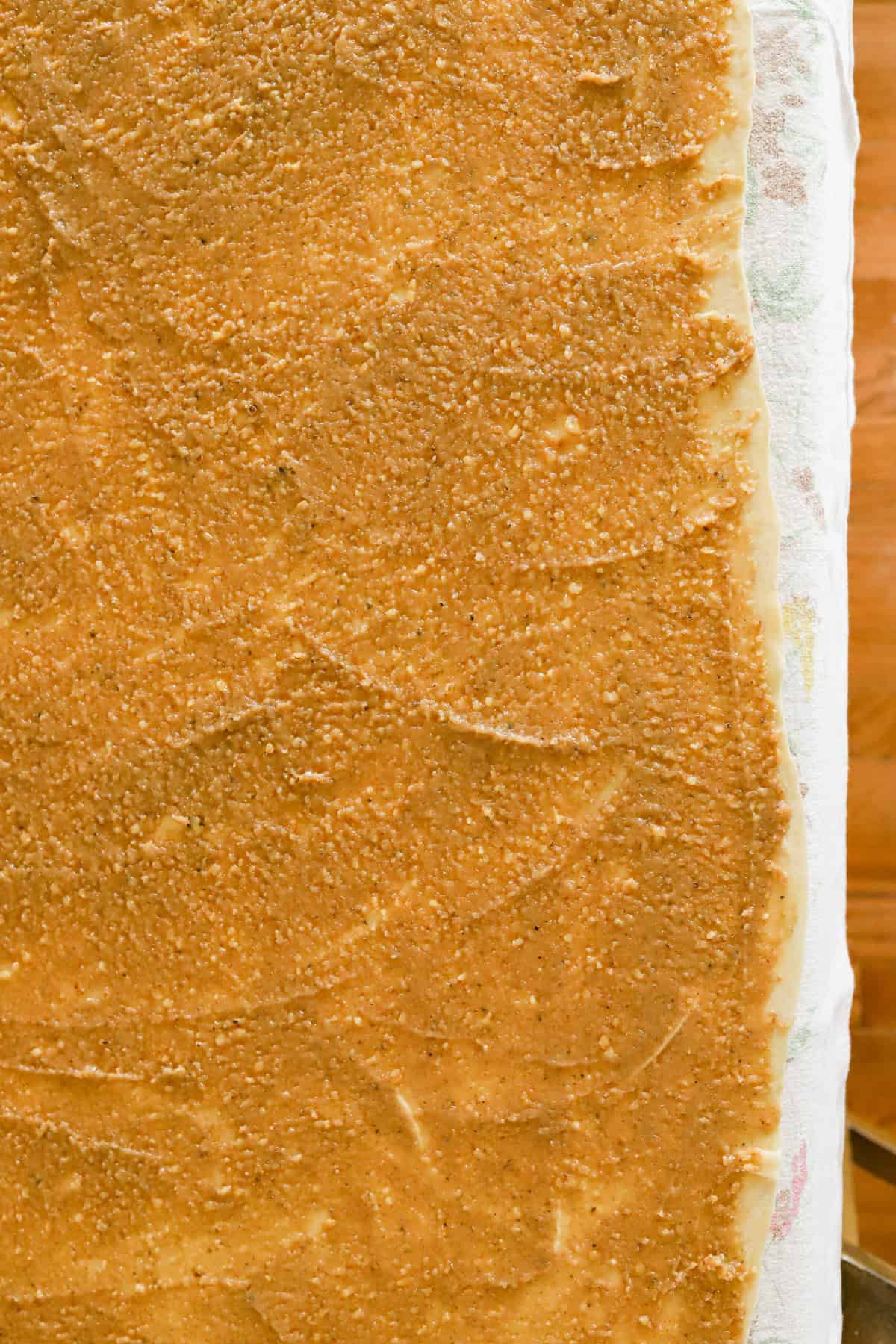
2. Make the filling – A delicious mixture featuring honey and ground walnuts. It should be thick but spreadable, similar to cake frosting. If it’s too runny, it will leak out during baking. If it’s too stiff, it may tear the dough when you spread it out.
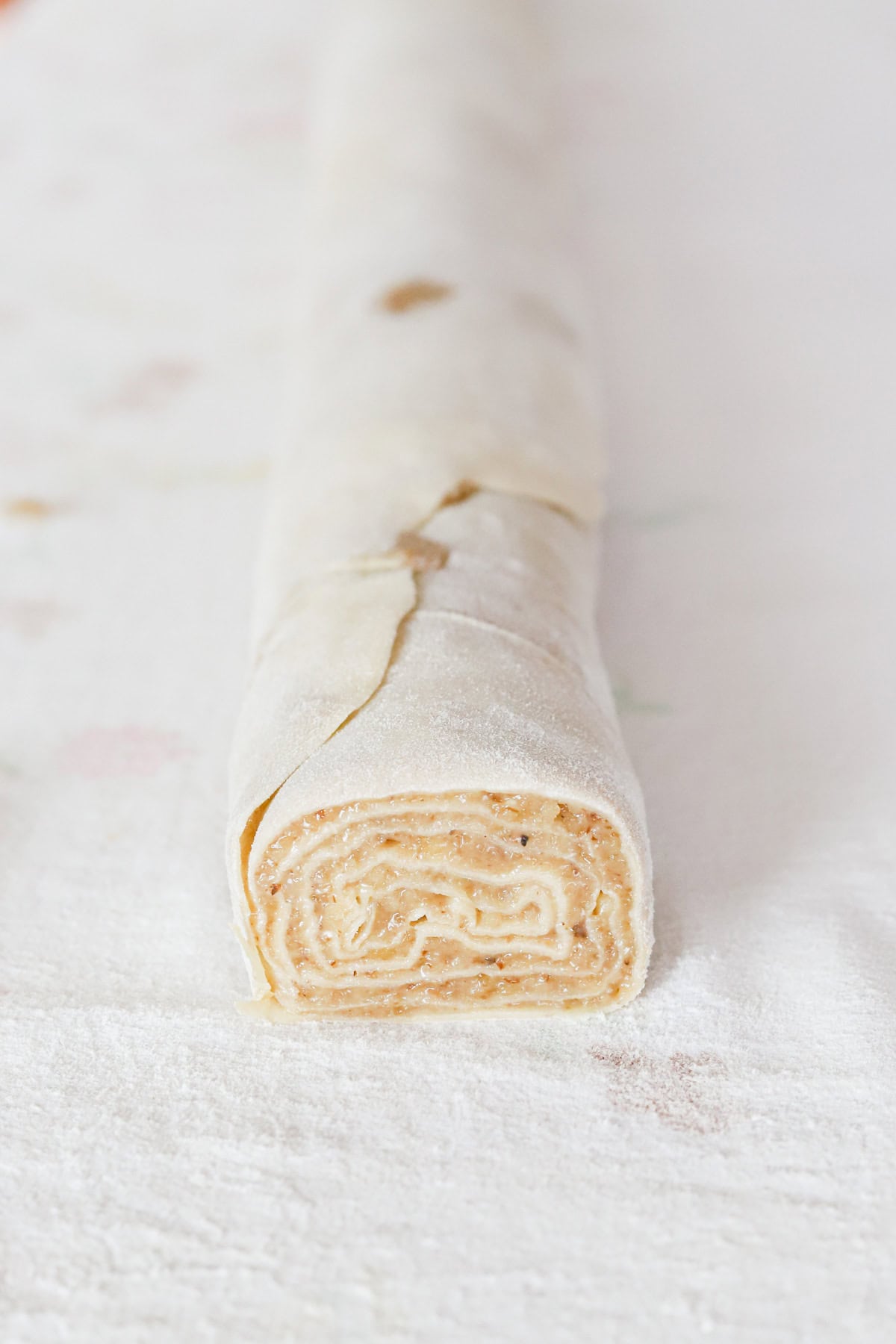
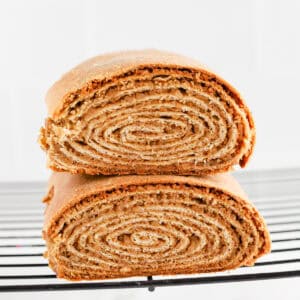
3. Assemble the potica – Roll the dough out on a floured cloth until it’s paper-thin (about 36×50 inches!). Tiny tears won’t ruin the loaf, but work gently and slowly. Spread the filling evenly right to the edge, then roll it into a tight roll (horizontally) for those perfect swirls.
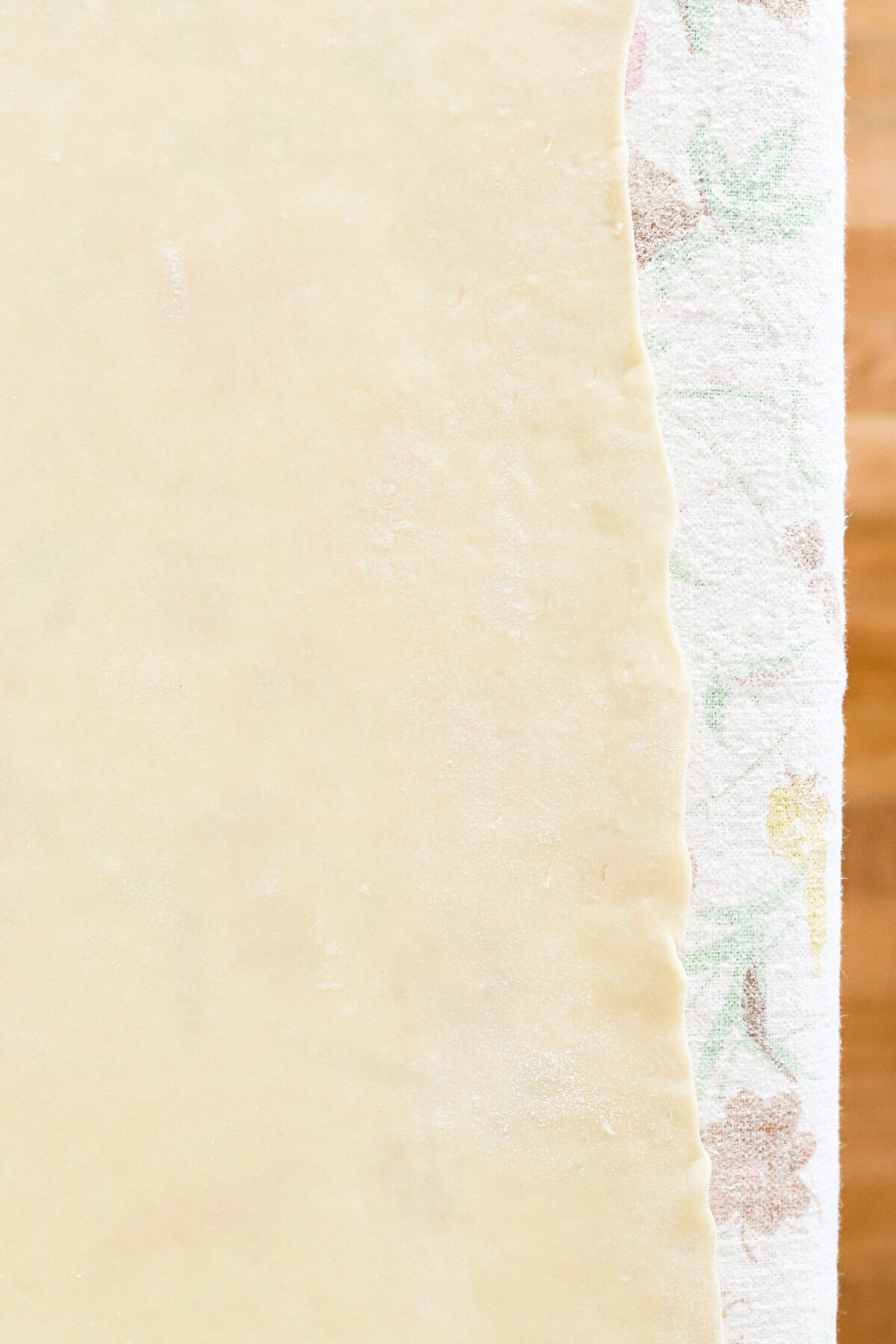
Quick Tip: Use a cotton tablecloth (preferably with a pattern) dusted with flour to roll out the dough on. My official “potica” tablecloth is white with pink & yellow flowers. The dough is rolled so thin, I can see those little blossoms peeking through. That’s how I know it’s ready!
4. Prep the loaf pans – Melt a pat of butter in 3 – 9×13 pans. Cut the long potica roll into smaller ones, about 10 inches long. Place each loaf in the pan and roll to coat in melted butter. You should get about 5 loaves from a batch. You could also use individual 9×5 loaf pans.
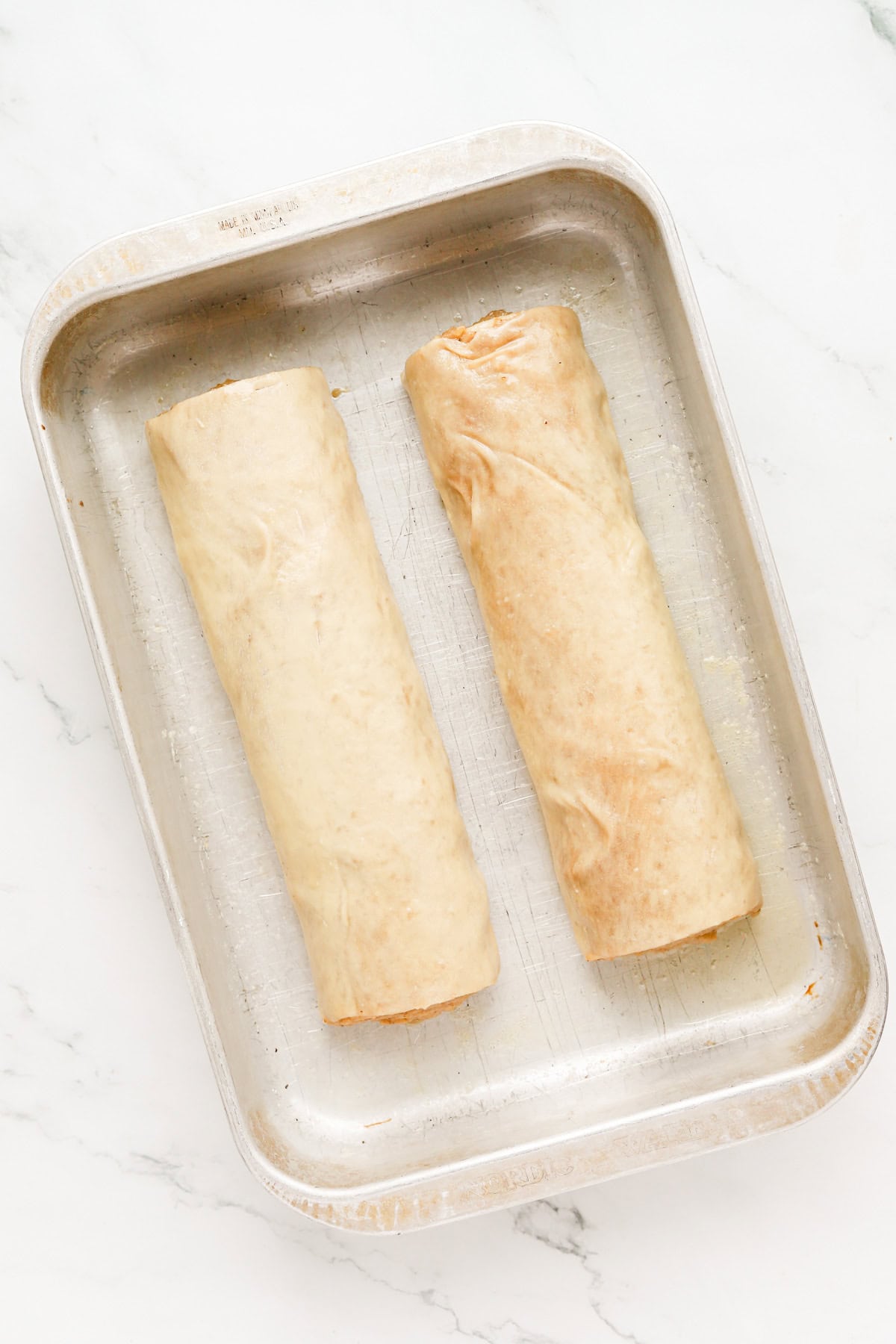
5. Bake to golden perfection – Bake at 350°F for 15 minutes. Reduce oven temperature to 325°F and continue baking 45 minutes-1 hour until loaves are a deep golden brown. Let cool before cutting.
This treat is truly a labor of love, and the total time for this recipe is anywhere from 3-4 hours (including rising and baking time), but I know you can do it!
Expert Tips
Above are the extremely condensed recipe steps. Instead of going through the recipe step-by-step, I’m going to give you some tips & tricks to help you learn this technique and successfully make potica. The full, detailed recipe card can be found below!
- Help your dough rise by placing it in a turned-off oven with just the oven light on. The perfect temperature!
- Make sure walnuts are very finely ground. Too course and they will tear the dough when spreading the filling.
- Warm filling spreads easier. If it cools while you’re rolling, reheat it so you don’t tear the dough.
- Use a heavy rolling pin. A marble or solid wood rolling pin helps you get the dough nice and paper thin.
- Cracks are normal. Don’t panic if your loaf cracks slightly in the oven. It just adds character! They happen when steam escapes during baking. To help, prick the rolled dough lightly with a toothpick before it goes into the oven.
- Use a serrated knife for clean cuts!
How to Serve & Store Potica
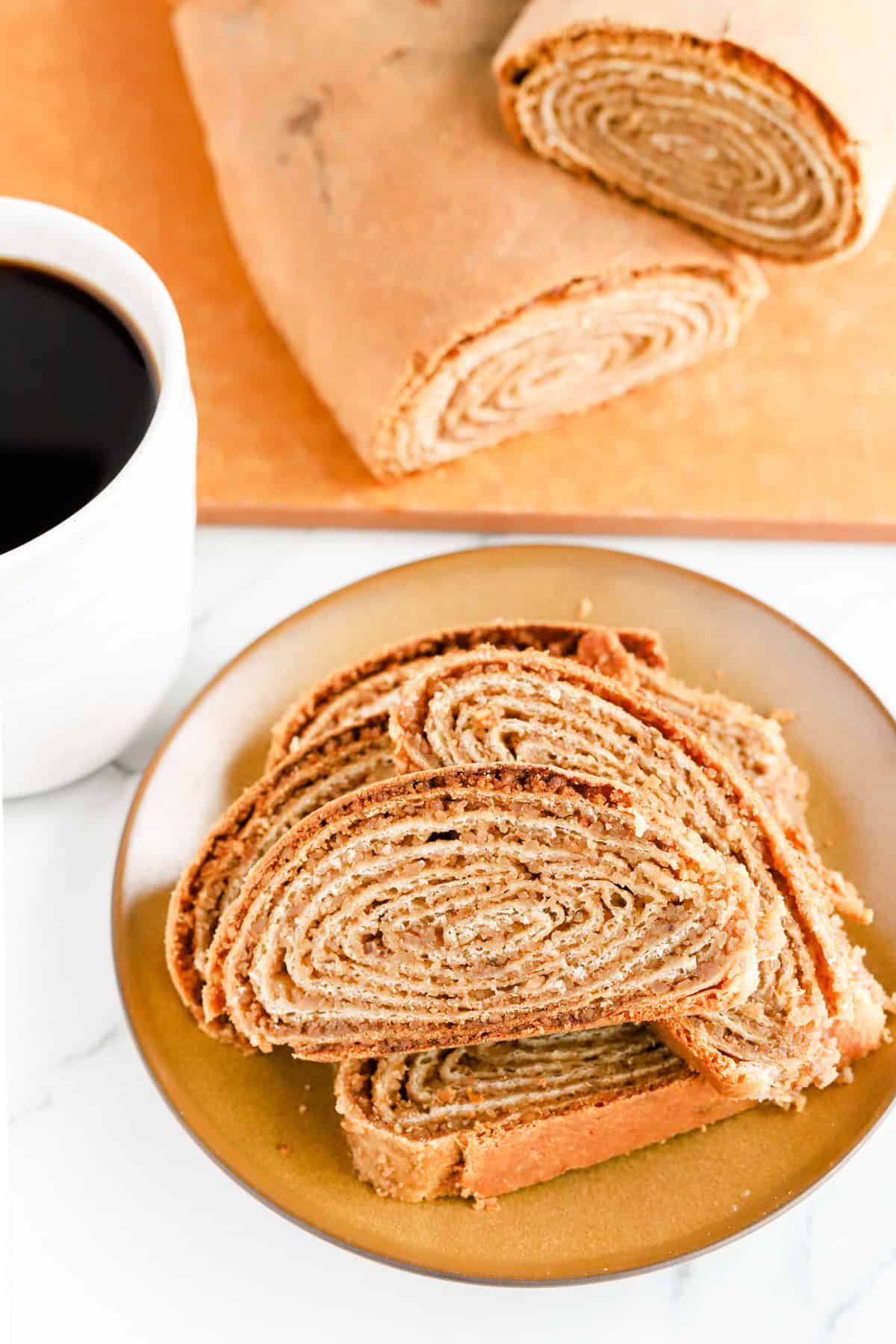
Holiday favorite: Enjoy this holiday sweet bread at Christmas breakfast, Easter brunch, or on a dessert tray. Don’t forget a good smear of butter on top!
Savory pairing: Believe it or not, many people (including my dad!) love a slice to eat it with ham or salami on top. The sweet-salty combo is surprisingly delicious.
Make-ahead magic: Potica freezes beautifully. Wrap the loaf in plastic wrap and foil and tuck it in the freezer for easy holiday treats or thoughtful homemade gifts.
Potica will keep at room temperature for up to 5 days, and longer in the refrigerator. Frozen potica will keep for up to 6 months.
My TV Debut!
In 2021, my friend Samantha texted me: “Want to go on TV and make potica with me?” My immediate response: Yes!
We filmed with TPT Twin Cities PBS for a series called Relish, hosted by Chef Yia Vang. The show highlights heritage recipes across Minnesota. Our episode was filmed in Samantha’s kitchen (it looked like a Food Network set), and we had the best time sharing stories and traditions about potica.
Watch our Relish episode here:
FAQ
For me, potica is more than just a recipe. It’s triggers so many memories both making it and enjoying it. Whether you grew up with potica or are discovering it for the first time, I hope this recipe inspires you to roll up your sleeves and bake a loaf of this unique bread!



Traditional Slovenian Potica Recipe (Walnut Nut Roll)
Ingredients
Potica Dough
- 2 envelopes dry active yeast
- ¼ cup warm water
- 1 cup milk
- ½ cup butter
- ¼ cup sugar
- 1 tsp. salt
- 3 large eggs beaten
- 5 cups all purpose flour + more if needed
Potica Filling
- 2 pounds walnuts
- ½ cup white sugar
- ½ cup light brown sugar lightly packed
- ⅓ cup butter melted
- 1 cup honey
- 1 cup heavy whipping cream
- 4 large eggs beaten
- 1 tsp. vanilla extract
Instructions
Potica Dough
- Heat milk until small bubbles form around edge and is steaming. Stir in butter, sugar and salt until dissolved. Let cool.1 cup milk, 1/2 cup butter, 1/4 cup sugar, 1 tsp. salt
- Combine yeast and warm water in small bowl, let sit 5-10 minutes until bubbling and foamy.2 envelopes dry active yeast, 1/4 cup warm water
- Once milk mixture is cool add yeast mixture and eggs. Stir until well combined.3 large eggs
- In large bowl add flour and cooled milk mixture. Stir until well combined.5 cups all purpose flour
- *Turn out onto floured board and knead about 10 minutes to incorporate all flour until dough is smooth & elastic. Add more flour as needed if dough is too sticky to handle.
- Grease clean, large bowl with butter. Cover with damp cloth and let rise in warm place for 60-90 minutes or until at least doubled in size.
Potica Filling
- Grind walnuts using a food processor until finely ground.2 pounds walnuts
- Combine walnuts, sugar, brown sugar and butter in large bowl, set aside.1/2 cup white sugar, 1/2 cup light brown sugar, 1/3 cup butter
- Heat cream and honey is small saucepan over medium heat, stirring constantly, until steaming and bubbling around edges. Pour over walnut mixture and stir to combine. Add eggs and vanilla, beat well.1 cup honey, 1 cup heavy whipping cream, 4 large eggs, 1 tsp. vanilla extract
Potica Assembly
- Heat oven to 350°F.
- Roll dough on floured cloth as thin as you can possible get it, should be basically see-through, to a large rectangle approximately 36×50 inches.
- Warm filling on stovetop or microwave if completely cooled (will be easier to spread). Spread filling in thin, even layer over rolled dough, extending all the way to the edges.
- Tightly roll dough, starting on long edge, like a jelly roll. Pinch edge to seal. Cut into 5 loaves, approximately 10-inches in length. (Loaves do not get a second rise)
- Melt 1 ½ tablespoons butter in 3- 9×13 pans. Roll cut loaves in butter to coat.
- Bake at 350°F for 15 minutes. Reduce oven temperature to 325°F (without opening oven) and continue baking 45 minutes-1 hour until loaves are a deep golden brown. Let cool before cutting.
Notes
Did you make this recipe?
Did you make this recipe? Leave a comment and star rating below. I’d love to know how it turned out!

From My Kitchen to Yours
Get approachable, family-friendly recipes and simple ideas for making mealtime more meaningful delivered straight to your inbox.




I was raised in Pueblo, Colorado. My father’s family came from Yugoslavia and my aunt and her mother made potica every year. They would put the dough on a sheet on the bed; they would get on both sides and stretch the dough until it was paper thin.
I inherited the recipe but didn’t make it very often. There was a four year period about 8-10 years ago that I would bake 16 loaves for Christmas and send them to my family and special friends but my back got to the point that I couldn’t handle the rolling requirement. This year, I just got hungry for some since I haven’t had any for several years. Fortunately, there is a place in Pueblo that makes it so I ordered some. (Mauro Farms)
It is a wonderful dessert.
Thank you for sharing! Love how the rolled the dough out on the bed!
My family immigrated from Serbia/Croatia and settled in Hibbing. I am the last living family member carrying the potica tradition forward, and this recipe and how you talked about the iron range blew my mind!! I had no idea that it was so big in that region and just spent an hour Googling more about the iron history and where our family played a part. Thank you for this and for the challenge to get my rolls as tight as yours. That is next level!!
Katie – this is so cool! We have to keep this tradition going!