In the hustle of everyday life, eating together at the family dinner table can feel like a lost tradition. Between work, school, sports, and activities, families can start to feel more like distant roommates than connected loved ones.
I’m on a mission to change that. Family mealtime matters, and today I want to share why plus give you simple tips (and a free printable!) to help bring back the value of eating together.
Are you ready for a revival?
Your Past Does Not Define Your Future
Growing up, my family ate dinner together almost every night. It wasn’t forced, it was just what we did. Now that I’ve got kids of my own, I want them to have those same memories. The same feeling of “this is just what we do.”
If you had family meals as a child, you probably know how meaningful they can be. If you didn’t? That’s okay. It’s never too late to start eating family meals together. Take one small step. Make a change. See the results.
Why Eating Together as a Family Matters
Sharing a meal isn’t just about eating, it’s about connection. This article from Healthy Children highlights the many proven benefits of family mealtime, such as:
- Developing healthy eating habits and fewer picky eaters
- Building self-esteem and a sense of belonging
- Learning table manners and communication skills
- Lower risk of obesity and high-risk behaviors
- Better emotional health and fewer psychological struggles
“All great change in America begins at the dinner table.” – Ronald Reagan
How to Prioritize Family Mealtime (Even When You’re Busy)
Forming a habit isn’t easy, especially when multiple people are involved. But with flexibility and a few strategies, you can make it work for your family.
1. Start Small
Life is busy. Instead of aiming for dinner together every night, try two or three nights a week. If dinner is tricky, consider breakfast, lunch or even a shared snack!
✨ Pro Tip: Progress over perfection. Even one shared meal a week is better than none.
2. Food Isn’t the Point
Can you believe a food blogger is telling you this? The meal itself doesn’t have to be fancy. Simple is great too. Some nights it may be take-out, other nights it’s pizza or leftovers. The important thing is eating together.
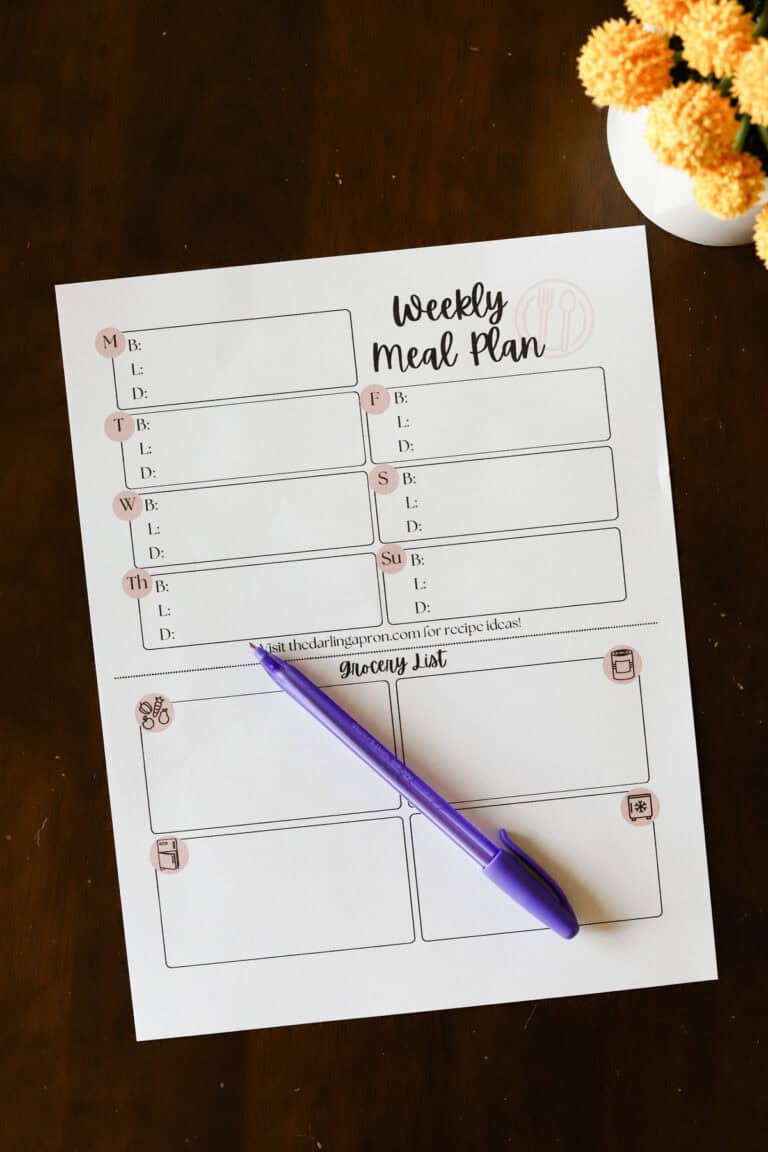
👉 Want help figuring that part out? See my Meal Planning post for help!
3. Make It Screen-Free
No phones, no TV. Some families even put devices in a basket during dinner. It may feel extreme, but even 30 minutes without screens can do wonders for focus and conversation.
4. Keep It Flexible
This isn’t about forcing everyone to sit together for a rigid 30 minutes. Even 10 minutes of quality conversation without distractions beats 30 minutes of forced silence.
“Your habits are what you choose them to be.” – Charles Duhigg
Table Talk: Conversation Starters
Family dinners shouldn’t feel like a board meeting with an agenda. The best conversations are the ones that happen naturally.
With little kids, sometimes it feels like you’re doing all the talking. But as they get older, it’s amazing what they’ll bring up. My girls surprise me all the time with the random, thoughtful, and funny things that come out at the dinner table.
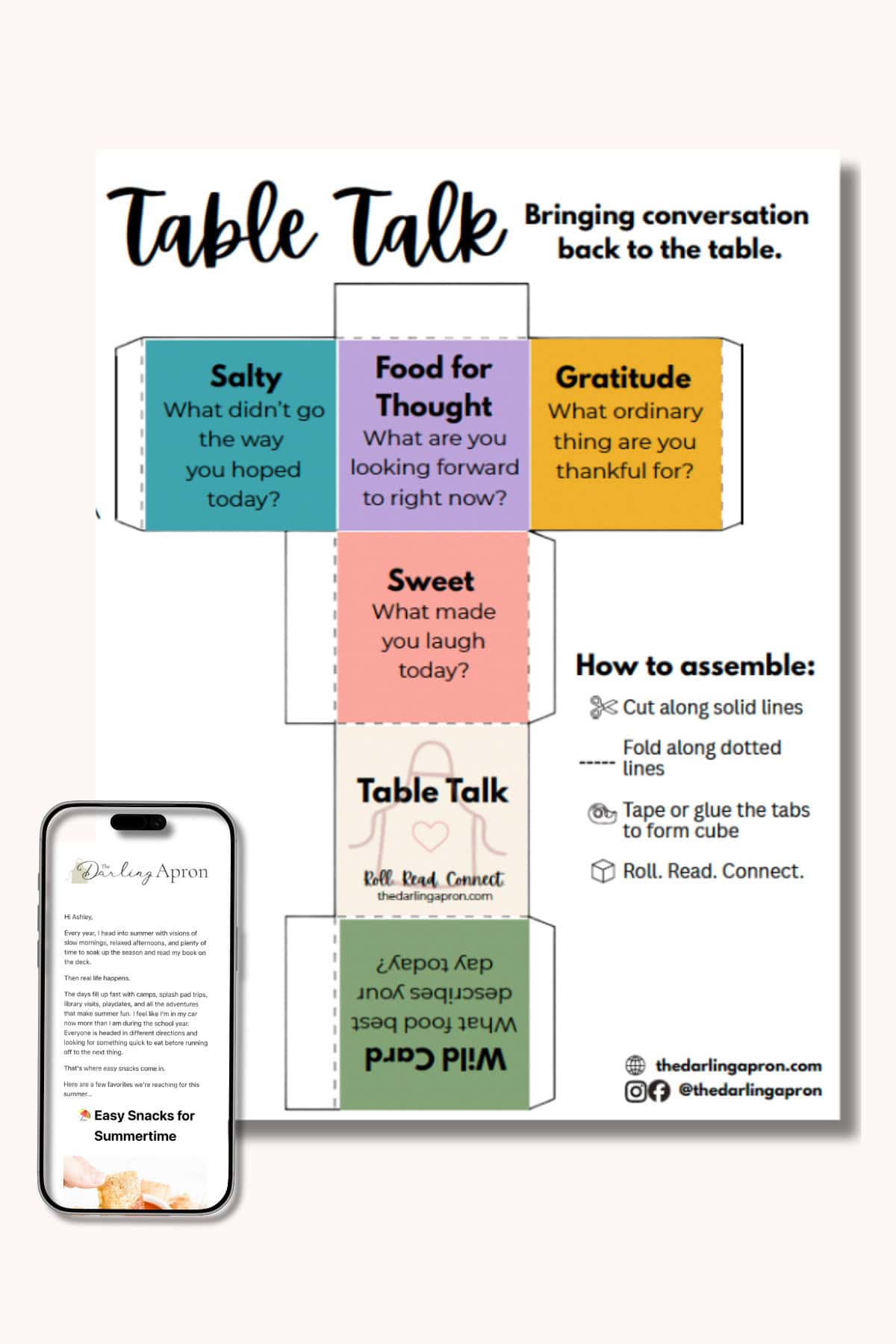
To help make conversation easier, I created a free printable called the Table Talk Cube. Simply print it, cut it out, and fold it together. Then let the cube decide the conversation starter for the night.
The cube includes prompts inspired by our family’s favorite dinner table conversations, including:
Sweet: What was the highlight of your day?
Salty: What didn’t go the way you hoped?
Gratitude: What simple thing made your day better?
Wild Card: Fun questions that get everyone talking and laughing.
For example, your child might share a “salty” moment about struggling with a test at school, opening the door for a deeper conversation later. Or a wild card question might have everyone laughing so hard dinner takes twice as long. Either way, you’ve created a moment of connection.
Join the Dinner Table Revival Movement
Family mealtime is about more than food. It’s about creating connection, gratitude, and memories.
- Download the free Table Talk Cube printable by signing up for the newsletter.
- Follow us on Facebook and Instagram for a look at daily life
- Share your own family dinner stories on social media using the hashtag #DinnerTableRevival.
As the saying goes, “The days are long, but the years are short.” Make the most of those everyday dinners. They’re the treasures your kids will carry with them.
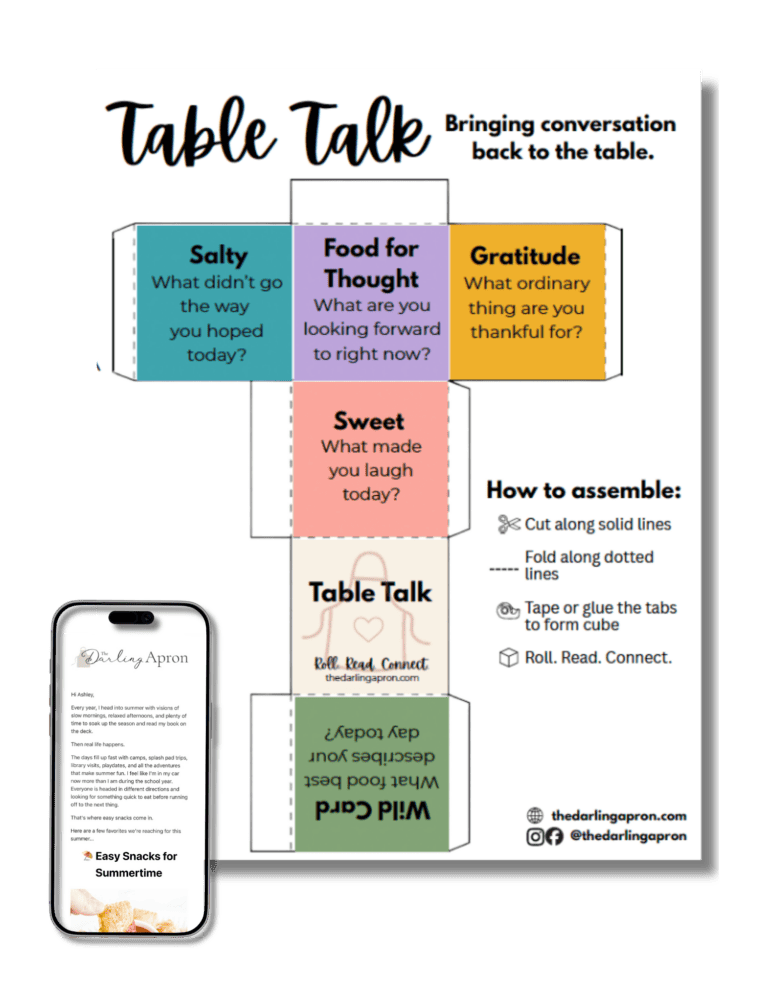
Get the Table Talk Cube!
Plus approachable, family-friendly recipes and simple ideas for making mealtime more meaningful delivered straight to your inbox.
FAQ
Some kids take time to open up. If you have teenagers, I know it can be hard. Try fun or silly conversation starters like “would you rather” questions, or my Table Talk printable to get the ball rolling. Sometimes the best chats happen when no one’s trying too hard.
Don’t worry about perfection. Family mealtime doesn’t have to happen seven nights a week to be meaningful. Start with one or two meals together and build from there. Breakfast, lunch, or even an after-school snack can create the same opportunity for connection.
Yes! Families that make time for meals tend to feel closer and more connected. Having those shared meal moments become daily little check-ins. They can range from serious conversations to times full of laughter that go a long way in developing trustful, strong connections.